
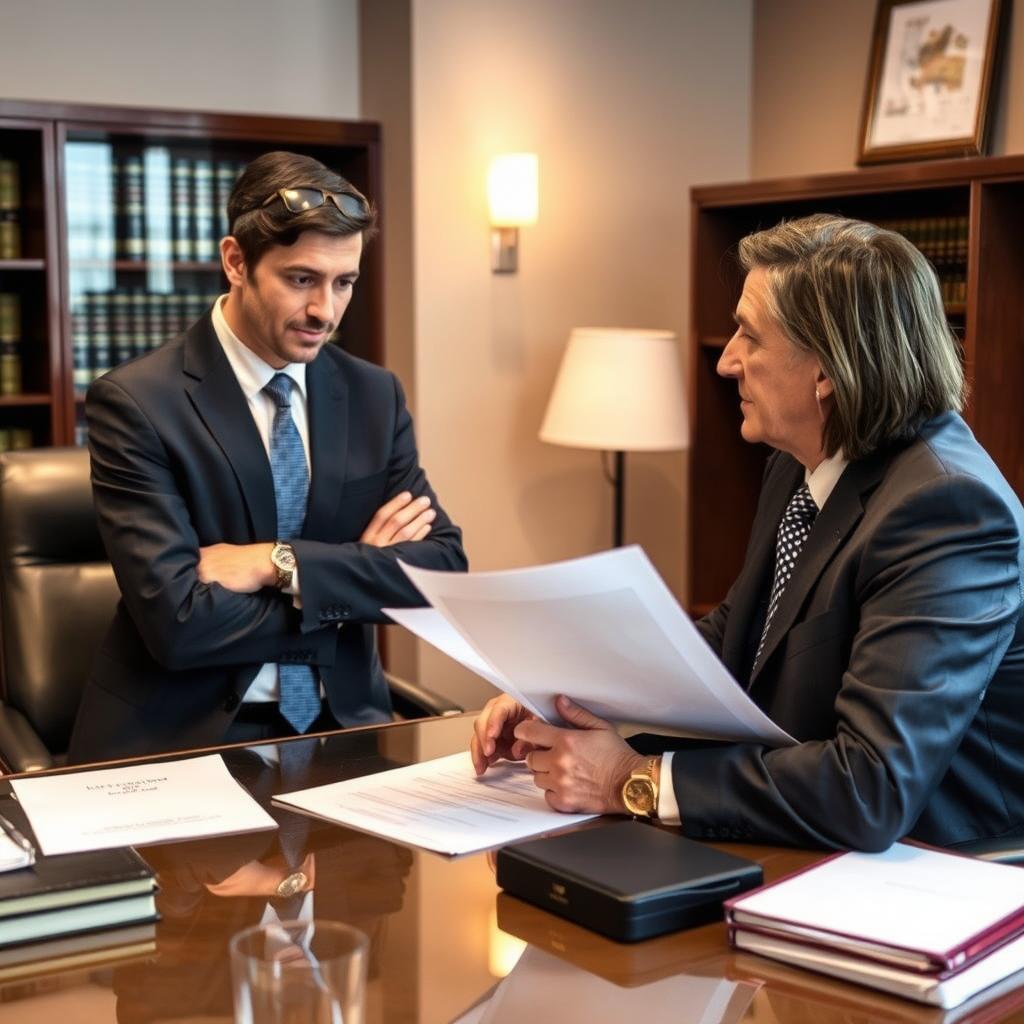
Fraud Defense Lawyer Hamilton County, NY
A fraud allegation in Hamilton County can disrupt your career, your reputation, and your freedom. New York prosecutors pursue fraud charges under multiple sections of the New York Penal Law, and a conviction can carry imprisonment, restitution obligations, and a permanent criminal record. Hamilton County, situated in the Adirondack region and part of the 4th Judicial District, handles criminal matters through the Hamilton County Supreme Court, located at 102 County View Drive in Lake Pleasant. The court hears felony-level fraud cases, while misdemeanor-level offenses are addressed in the local criminal court. Because fraud cases often involve documentary evidence, financial records, and complex factual narratives, early engagement with defense counsel is important. Mr. Sris and his Of Counsel team represent individuals facing fraud allegations in Hamilton County and throughout New York. To request a consultation, reach Law Offices Of SRIS, P.C. at (888) 437-7747. Law Offices Of SRIS, P.C. – Advocacy Without Borders.
What Fraud Defense Means in Hamilton County
Fraud defense in New York covers a range of criminal charges involving allegations of deception for financial or property gain. Under the New York Penal Law, fraud-related offenses include forgery, identity theft, grand larceny by false pretenses, insurance fraud, and schemes to defraud. The classification of a fraud charge—misdemeanor or felony—depends on factors such as the value involved, the method alleged, and the defendant’s prior record. In Hamilton County, felony fraud cases are prosecuted in the Hamilton County Supreme Court, while misdemeanor charges are handled at the local criminal court level.
Hamilton County is the least populous county in New York, encompassing communities such as Lake Pleasant, Indian Lake, Speculator, Inlet, Long Lake, Hope, Wells, and Blue Mountain Lake. The county’s small population does not mean fraud cases receive less scrutiny. Prosecutors in the 4th Judicial District evaluate financial evidence, electronic records, and witness testimony carefully. New York’s 2020 bail reform eliminated cash bail for most misdemeanors and non-violent felonies, meaning many defendants are released on their own recognizance or with conditions pending resolution of their case. Understanding the procedural landscape in Hamilton County helps individuals facing fraud charges make informed decisions about their defense.
How Mr. Sris and His Of Counsel Handle Fraud Defense Cases
Fraud cases often involve voluminous documentation—bank statements, contracts, emails, accounting records, and electronic communications. Mr. Sris and his Of Counsel review the prosecution’s evidence to assess whether the state can prove each element of the charged offense beyond a reasonable doubt. A fraud charge typically requires the prosecution to establish that the defendant knowingly made a false representation or engaged in a deceptive act with intent to defraud, and that the alleged victim relied on that representation to their detriment. Challenging any one of these elements can affect the outcome of the case.
The defense approach varies depending on the specific charge and the factual circumstances. In some cases, defense counsel may identify gaps in the documentary record or inconsistencies in witness accounts. In others, the defense may focus on the absence of intent—a required element for most fraud offenses under the New York Penal Law. Mr. Sris and his Of Counsel also evaluate whether procedural issues exist, such as questions about how evidence was obtained or whether statements were taken in compliance with applicable law. For eligible first-offense cases, New York offers dispositions such as an Adjournment in Contemplation of Dismissal, which can result in charges being dismissed after a period of good conduct. Every case is assessed individually, and the defense strategy is tailored to the specific facts and the client’s circumstances.
About Mr. Sris and His Of Counsel Team
Mr. Sris, Owner and Founder of Law Offices Of SRIS, P.C., has practiced since 1997 and is admitted in Virginia, Maryland, the District of Columbia, New Jersey, and New York. He is a former prosecutor whose experience in criminal trial work informs his approach to defense representation. Mr. Sris testified before the Virginia House Courts of Justice Committee in support of 2019 HB 635 (chief patron Del. David Bulova). He brings a detail-oriented approach to fraud defense, drawing on years of experience examining documentary evidence and evaluating prosecution theories.
Mr. Sris is supported by Of Counsel attorneys who contribute to case analysis and preparation. The firm’s multi-state practice means that Mr. Sris and his Of Counsel are familiar with how financial crime allegations are investigated and prosecuted. The firm’s New York location serves clients in Hamilton County and throughout the state. To request a consultation about a fraud matter, call (888) 437-7747.
Frequently Asked Questions
What constitutes criminal fraud under New York law?
Under New York law, criminal fraud generally involves knowingly making a false statement or misrepresentation with intent to defraud another person, causing that person to rely on the falsehood and suffer a loss. Fraud charges in New York are brought under various sections of the New York Penal Law. Common fraud-related offenses include forgery, identity theft, grand larceny by false pretenses, insurance fraud, and scheme to defraud. The severity of the charge depends on the value of the property or money involved and the method by which the fraud was allegedly committed. Because the prosecution must prove intent, cases often turn on whether the defendant acted knowingly and deliberately rather than by mistake or misunderstanding.
What should I do if I am under investigation for fraud in Hamilton County?
If you are under investigation for fraud in Hamilton County, you should consult defense counsel before making any statements to law enforcement or investigators. Fraud investigations can involve subpoenas for financial records, search warrants for electronic devices, and interviews with witnesses. Statements made during an investigation can be used in subsequent criminal proceedings. Early engagement with an attorney allows for an assessment of the scope of the investigation and the potential exposure. Mr. Sris and his Of Counsel can advise on how to respond to investigative inquiries and whether voluntary cooperation is appropriate under the circumstances. To discuss your situation, reach Law Offices Of SRIS, P.C. at (888) 437-7747.
Are fraud charges in New York classified as felonies or misdemeanors?
Fraud charges in New York can be classified as either misdemeanors or felonies, depending primarily on the value of the property or money involved and the specific offense charged. Under the New York Penal Law, offenses are graded from violations up to Class A-I felonies. A petit larceny charge involving property valued under $1,000 is typically a Class A misdemeanor. Grand larceny charges, which apply when the value exceeds $1,000, are felonies with grading that increases with the amount involved. Forgery and identity theft charges also vary in classification based on the circumstances. The court where the case is heard depends on the classification—misdemeanors are handled in the local criminal court, while felonies are prosecuted in the Hamilton County Supreme Court.
What is an Adjournment in Contemplation of Dismissal in a fraud case?
An Adjournment in Contemplation of Dismissal, or ACD, is a New York disposition in which criminal charges are adjourned for a period of six to twelve months and automatically dismissed if the defendant has no new arrests during that period. An ACD may be available for certain first-offense fraud charges. If the court grants an ACD, the defendant does not enter a guilty plea, and upon successful completion of the adjournment period, the charges are dismissed and the record can be sealed. Not every case qualifies for an ACD, and the decision rests with the court. For guidance on your specific situation, reach Law Offices Of SRIS, P.C. at (888) 437-7747.
How are fraud cases different from other criminal charges in New York?
Fraud cases differ from many other criminal charges in New York because they often rely heavily on documentary evidence, financial records, and electronic data rather than eyewitness testimony or physical evidence. This means that defense preparation often involves a thorough review of bank statements, contracts, emails, and accounting documents. The prosecution must establish that the defendant acted with intent to defraud, which can be challenging when transactions are complex or when the alleged misrepresentation could be explained by mistake or differing interpretations. Mr. Sris and his Of Counsel evaluate the documentary record to determine whether gaps exist in the prosecution’s case and whether defenses such as lack of intent or good-faith belief are viable.
Can a fraud conviction in New York be sealed or expunged?
New York law provides for conditional sealing of certain criminal convictions under CPL § 160.59 after a waiting period of ten years, provided the applicant meets specific eligibility requirements. Not all fraud convictions are eligible for sealing. Convictions for certain felony offenses, violent crimes, and sex offenses are generally excluded. An ACD disposition, by contrast, results in automatic sealing of the record upon dismissal. The sealing process requires a formal application to the court. To discuss the details of your matter, contact Law Offices Of SRIS, P.C. at (888) 437-7747.
Explore related practice areas:
Criminal Defense Lawyer in New York County |
Criminal Defense Lawyer in Kings County |
Criminal Defense Lawyer in Queens County |
Criminal Defense Lawyer in Nassau County
New York legal resources:
New York Penal Law |
New York State Unified Court System
Attorney advertising. Prior results do not guarantee a similar outcome.
Case results depend on a variety of factors unique to each case. Results may vary.
Reviewed by Mr. Sris, Owner and Founder. Admitted in Virginia, Maryland, the District of Columbia, New Jersey, and New York. Practicing since 1997.