
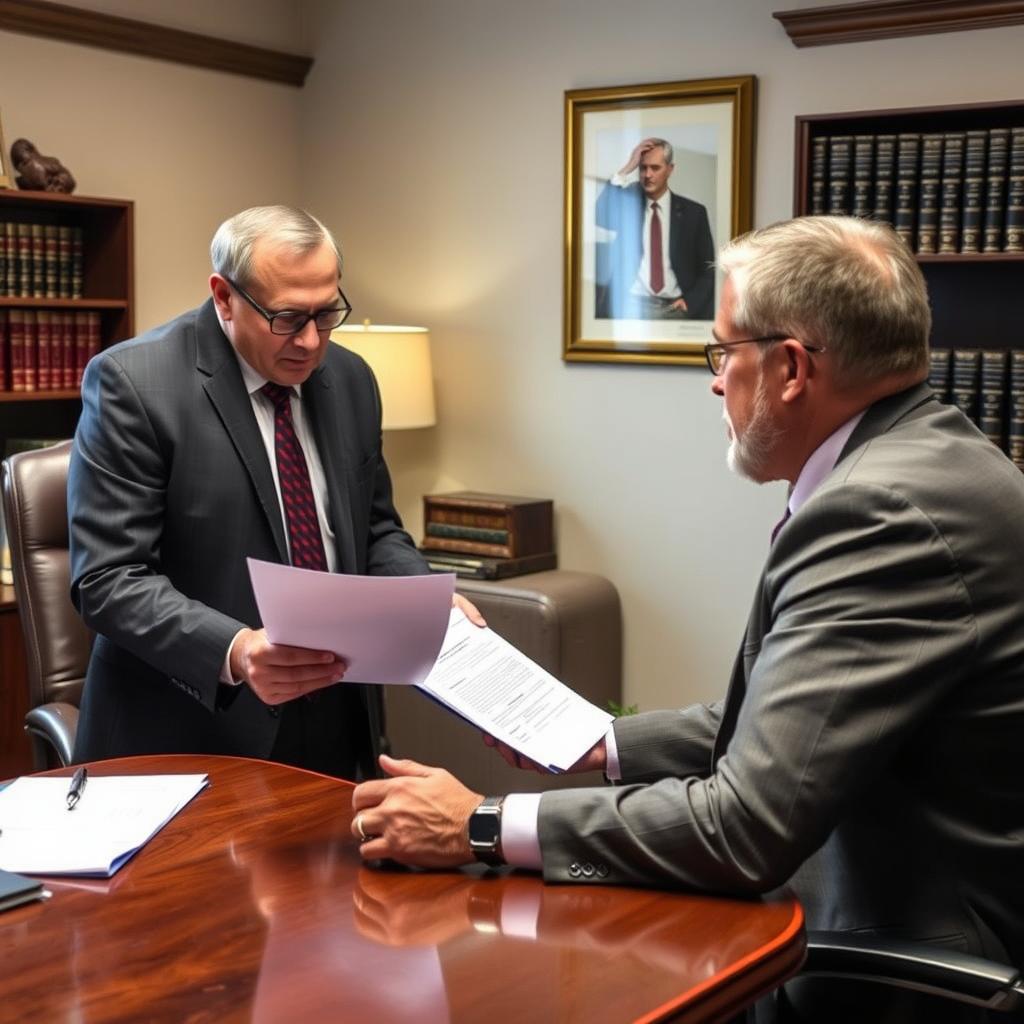
What happens at a criminal arraignment in Cattaraugus County
The phone rings in the middle of the night. A family member has been arrested and is being held at the Cattaraugus County jail in Little Valley. You are told they will be taken before a judge for an arraignment within hours. An arraignment is the first court appearance after an arrest, where a judge formally reads the charges, advises the defendant of their rights, and asks how they plead. The outcome of this proceeding can affect bail, release conditions, and the direction of the entire case. Understanding what happens at an arraignment in Cattaraugus County—and having experienced legal counsel present—can make a significant difference. Mr. Sris and the firm’s Of Counsel attorneys at Law Offices Of SRIS, P.C. represent clients in criminal matters throughout Western New York, including Cattaraugus County. Call (888) 437-7747 to speak with our firm about your situation. Law Offices Of SRIS, P.C. – Advocacy Without Borders.
Strategy Options at Your Cattaraugus County Arraignment
An arraignment is not a trial. It is a procedural hearing, but the decisions made there set the course for everything that follows. Before you walk into the courtroom at the Cattaraugus County Supreme Court on Court Street in Little Valley, you should understand your options. You have the right to consult with an attorney. If you cannot afford one, the court will assign a lawyer from the 18-B panel. However, many people choose to hire private counsel—like Mr. Sris and the firm’s Of Counsel attorneys—so that an advocate who knows the local system is prepared to argue for release, press for early case review, and start building a defense strategy immediately.
At the arraignment, you can plead not guilty, guilty, or no contest. A not-guilty plea preserves all your rights and gives your attorney time to investigate the case and negotiate with the prosecutor. In Cattaraugus County, the District Attorney’s office handles prosecutions. An experienced attorney can often identify weaknesses in the case early, discuss diversion programs, or request an Adjournment in Contemplation of Dismissal (ACD) for eligible first offenses. The key is having counsel who understands the local courts and the options available under New York law.
What To Expect at the Arraignment
In Cattaraugus County, the arraignment typically takes place at the Cattaraugus County Supreme Court, located at 303 Court Street in Little Valley. For misdemeanor cases, the proceeding may also be held in one of the local town or village courts. By law, an arraignment happens promptly after arrest—usually within 24 hours. The judge will first inform the defendant of the charges listed in the complaint. The defendant will then be advised of the right to remain silent, the right to an attorney, and the right to a preliminary hearing in certain felony cases.
After the rights are explained, the defendant enters a plea. Most people plead “not guilty” at this stage. The judge then addresses bail. New York’s bail reform, enacted in 2020, eliminated cash bail for most misdemeanors and non-violent felonies. As a result, many defendants are released on their own recognizance with a court date to return. For certain violent felony charges, or when a flight risk is found, bail may be set. Having legal representation at the arraignment can make a critical difference in the bail decision. An attorney can present arguments about community ties, employment, and lack of prior record to help secure the least restrictive release conditions.
Potential Penalties for Criminal Charges in Cattaraugus County
The penalties a person faces depend entirely on the classification of the offense. New York’s Penal Law organizes crimes into violations, misdemeanors, and felonies. A violation—such as disorderly conduct—carries a maximum of 15 days in jail. Class B misdemeanors are punishable by up to three months, and Class A misdemeanors by up to one year in jail. Felonies are more serious: a Class E felony can result in 1 to 4 years of incarceration, while a Class C felony carries a sentence of 3½ to 15 years. The most serious charges, such as Class A-I felonies, can lead to a life sentence.
Beyond incarceration, a conviction brings fines, mandatory surcharges, and collateral consequences including loss of employment opportunities, housing restrictions, and immigration implications for non-citizens. However, many Cattaraugus County defendants are first-time offenders and may be eligible for diversion programs or an ACD, which can result in the charges being dismissed after a period of good behavior. Mr. Sris and the firm’s Of Counsel attorneys are familiar with these options and can explain whether a client qualifies.
About Mr. Sris and the Firm’s Of Counsel Attorneys
Mr. Sris, Owner and Founder of Law Offices Of SRIS, P.C., established the firm in 1997. A former prosecutor, he understands how the government builds criminal cases and uses that insight to craft defense strategies. Mr. Sris testified before the Virginia House Courts of Justice Committee in support of 2019 HB 635 (chief patron Del. David Bulova). He is admitted to practice in Virginia, Maryland, the District of Columbia, New Jersey, and New York.
Mr. Sris and the firm’s Of Counsel attorneys bring extensive combined legal experience to criminal defense matters in Cattaraugus County. The team includes attorneys who have served as former assistant state’s attorneys and former law enforcement officers—backgrounds that provide a unique perspective when evaluating arrests, police procedures, and prosecution tactics. Results may vary. The firm maintains a reputation for clear communication, thorough preparation, and a client-focused approach at every stage of a case.
Frequently Asked Questions
What is an arraignment?
An arraignment is the first court appearance after an arrest, where a judge formally informs the defendant of the charges and asks for a plea. The judge also advises the defendant of their legal rights—including the right to remain silent and the right to an attorney—and may address bail or release conditions. The proceeding is not a trial; no evidence is presented, and no witnesses testify. In Cattaraugus County, the arraignment happens quickly after the arrest, usually within 24 hours, at the county court in Little Valley or a local town court.
How long after an arrest does an arraignment happen in Cattaraugus County?
In Cattaraugus County, an arraignment typically occurs within 24 hours of the arrest. New York law requires that a defendant be brought before a judge without unnecessary delay. If the arrest occurred late at night, the arraignment might take place the following morning or at a special bail session. Law enforcement may issue a desk appearance ticket (DAT) for low-level offenses, which schedules the arraignment for a future date, and the person is released at the station instead of being held for an in-custody arraignment.
Do I need a lawyer for an arraignment?
You have the right to be represented by a lawyer at your arraignment, and it is strongly advisable to have one. The arraignment sets the initial conditions of release and can impact the entire case. An attorney can argue for release on recognizance, negotiate bail amounts, and begin discussions with the prosecutor about potential resolutions. If you cannot afford a private attorney, the court may assign a public defender or an attorney from the 18-B panel. However, hiring private counsel like Mr. Sris and the firm’s Of Counsel attorneys ensures dedicated attention from an advocate who knows the local system before you even enter the courtroom.
What should I do if I have a family member being arraigned?
Contact an experienced criminal defense attorney immediately. Provide the attorney with the name, date of birth, and the location where your family member is being held, if known. If the person is in custody at the Cattaraugus County jail, an attorney can begin working on gathering information about the charges and preparing for the bail argument. If you plan to post bail, understand the types of bail accepted (cash, bond, credit card, or property). Also, refrain from discussing the facts of the case over recorded jail telephone lines, as those calls are monitored.
What plea options are available at an arraignment?
You may plead not guilty, guilty, or no contest (nolo contendere). Pleading not guilty preserves your right to a trial and gives your attorney time to examine the evidence, file motions, and negotiate with the prosecutor. A guilty plea at the arraignment results in immediate sentencing, but this is rarely advisable without understanding the full consequences. A no contest plea has the same effect as a guilty plea for sentencing purposes but cannot be used against you as an admission in a related civil lawsuit. Most defense attorneys recommend pleading not guilty at the arraignment.
Can I get released at the arraignment?
Yes, most people charged with non-violent offenses in Cattaraugus County are released at the arraignment under New York’s 2020 bail-reform law. Cash bail is no longer required for most misdemeanors and many non-violent felonies. The judge may release the defendant on their own recognizance (a promise to return to court) or impose non-monetary conditions like supervised release or travel restrictions. For certain violent felony charges, or if the prosecutor can show that the defendant poses a flight risk, bail may still be set. An attorney can present arguments to minimize the risk of detention.
What happens after the arraignment?
After the plea and bail determination, the court schedules the next court date—typically for a conference, a hearing, or a trial date. In misdemeanor cases, the next appearance is often a pretrial conference where the defense attorney and the prosecutor discuss the case and explore plea offers. In felony cases, the case proceeds to a preliminary hearing or a grand jury presentation. During the period between appearances, your attorney will investigate the case, review police reports and evidence, and determine whether to file motions to suppress or dismiss.
Can charges be dropped at the arraignment?
It is rare for charges to be dropped at the arraignment itself, but an attorney can begin laying the groundwork for a dismissal later. The assistant district attorney handling the arraignment typically does not have full case details and is unlikely to agree to dismiss charges on the spot. However, a defense attorney can point out obvious defects in the complaint, such as a missing essential element, which could lead to a quick dismissal request when a motion-worthy issue exists. In many cases, a successful defense strategy results in charges being reduced or dismissed at a later stage.
What is an Adjournment in Contemplation of Dismissal (ACD)?
An ACD is a disposition under New York law where a case is adjourned for a set period—often six months—and then automatically dismissed if the defendant stays out of trouble. ACDs are frequently offered for first-time, low-level offenses in Cattaraugus County. The defendant does not plead guilty; instead, the case is placed on hold while the person complies with any conditions the court sets. Upon successful completion of the adjournment period, the charges are dismissed and the record is sealed. An attorney can request an ACD at or shortly after the arraignment.
Should I hire a private defense attorney for an arraignment?
While you may ask the court to assign a public defender, hiring a private attorney offers advantages at the earliest stage. A private criminal defense lawyer like Mr. Sris or one of the firm’s Of Counsel attorneys can devote time immediately—meeting with you before the arraignment, contacting the prosecutor, and preparing a detailed release plan. Public defenders are skilled but manage high caseloads and may not have an opportunity to discuss strategy with you in advance. The choice to retain private counsel ensures that your case gets focused attention from the moment of arrest.
To discuss your case and learn how Mr. Sris and the firm’s Of Counsel attorneys can help, call Law Offices Of SRIS, P.C. at (888) 437-7747. For a detailed statutory analysis of New York criminal law, visit our comprehensive resource at srislawyer.com.
Official primary source resources: Cattaraugus County Supreme Court | New York Penal Law | New York Criminal Procedure Law
Attorney advertising. Prior results do not guarantee a similar outcome. Case results depend on a variety of factors unique to each case. Results may vary.