
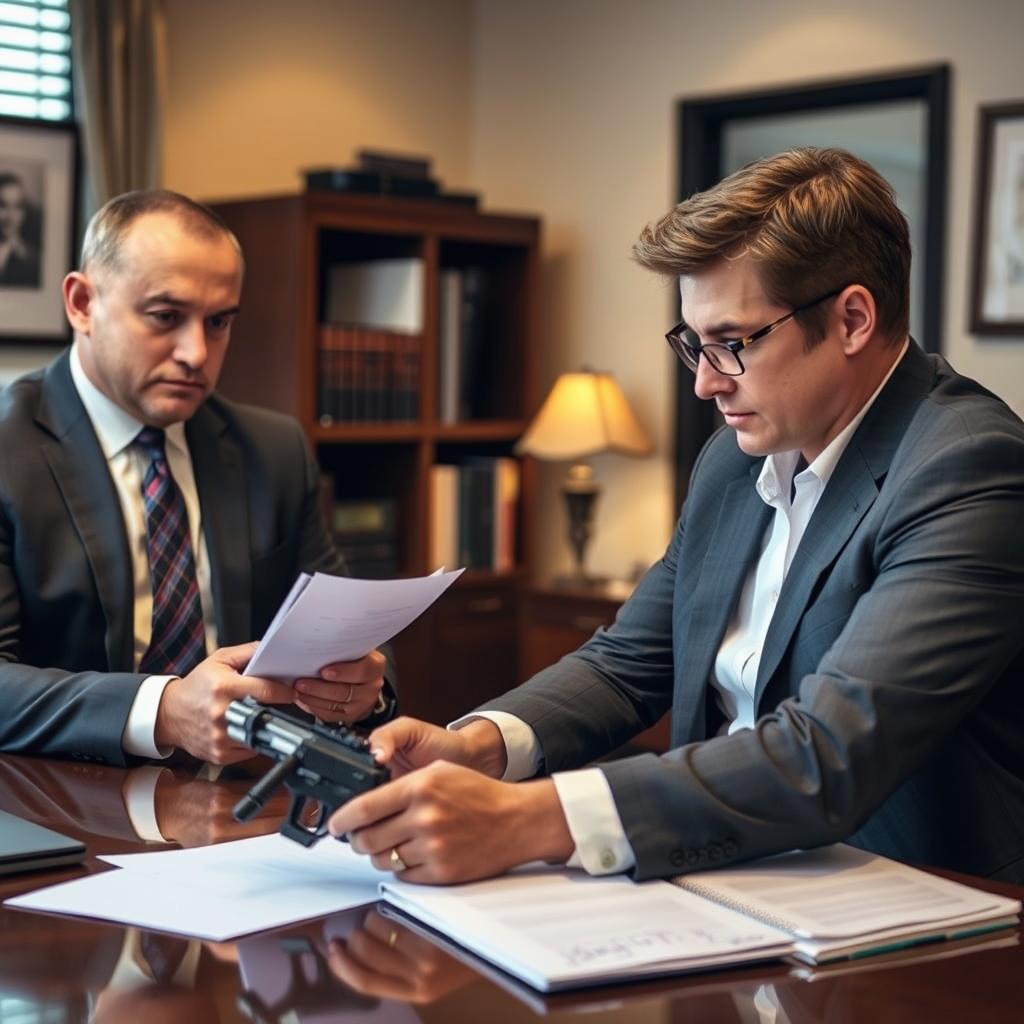
Gun Possession Lawyer New York County
You need a gun possession lawyer New York County immediately if you are charged. New York has some of the nation’s strictest gun laws. A conviction can mean years in prison and a permanent felony record. Law Offices Of SRIS, P.C. —Advocacy Without Borders. Our attorneys defend clients in New York County Supreme Court and local criminal courts. (Confirmed by SRIS, P.C.)
Statutory Definition of Gun Possession in New York
New York Penal Law § 265.03 defines criminal possession of a weapon in the second degree as a Class C violent felony with a maximum penalty of 15 years in prison. This statute is the primary charge for illegal firearm possession in New York County. The law makes it a crime to possess a loaded firearm outside your home or place of business. It also criminalizes possessing any firearm with intent to use it unlawfully against another person. The classification as a violent felony triggers mandatory state prison upon conviction. It also carries severe post-release supervision terms.
You face these charges in New York County Supreme Court. The prosecution must prove you knowingly possessed the firearm. They must also prove it was operable and loaded. Defenses challenge the legality of the police stop or the search. They also challenge whether you had actual or constructive possession. Mere proximity to a gun is not enough for a conviction. The New York County District Attorney’s Location aggressively prosecutes these cases. You need a gun possession lawyer New York County who knows these statutes inside and out.
What is the difference between PL 265.03 and PL 265.02?
PL 265.02 is criminal possession of a weapon in the third degree, a Class D felony. This charge often applies to possession of a firearm on school grounds or prior conviction of a crime. It carries a maximum sentence of 7 years. PL 265.03 is a more serious Class C violent felony. The key distinction is the firearm being loaded and outside the home. The penalties are significantly higher for a PL 265.03 charge. Your gun possession lawyer New York County must identify which statute applies.
Can I be charged for a gun I didn’t know was in my car?
Yes, you can be charged under a theory of “constructive possession.” Prosecutors argue you had dominion and control over the area where the gun was found. This is common in vehicle stops where multiple people are present. The charge hinges on your knowledge of the weapon’s presence. Proving lack of knowledge is a critical defense strategy. An experienced attorney will dissect the circumstances of the discovery. They will challenge the prosecution’s ability to prove knowing possession beyond a reasonable doubt.
What makes a firearm “loaded” under New York law?
A firearm is considered loaded if there is ammunition in the gun itself. This includes the chamber, cylinder, or magazine attached to the firearm. The law does not require a round to be in the firing chamber. An unloaded firearm with a loaded magazine inserted qualifies as loaded. This definition is broader than in many other states. Prosecutors in New York County use this definition to elevate charges. A skilled gun possession lawyer New York County scrutinizes the arrest report for errors on this point.
The Insider Procedural Edge in New York County
Your case will begin at the New York County Criminal Court at 100 Centre Street, New York, NY 10013. This is the arraignment court for all arrests in Manhattan. The initial appearance happens within 24 hours of arrest. The judge will set bail or release conditions at this hearing. The case will then be transferred to New York County Supreme Court for felony proceedings. The Supreme Court is located at 60 Centre Street. The procedural timeline is fast and demanding.
Filing fees are part of the court costs but are not the primary financial concern. The real focus is on securing release and building a defense. New York County prosecutors file a “complaint” detailing the charges at arraignment. Your attorney must be prepared to argue for low bail or release on recognizance. The court’s docket is heavy, and hearings are brief. Having counsel who knows the judges and court clerks is a tangible advantage. Procedural missteps early on can jeopardize your entire case. Learn more about Virginia legal services.
How long does a gun possession case take in New York County?
A felony gun possession case typically takes 12 to 18 months to resolve. The discovery process is extensive under New York’s new discovery laws. The prosecution must turn over all evidence within strict deadlines. Motions to suppress evidence can add several months to the timeline. Most cases do not go to trial but are resolved through negotiation. The court system in New York County moves deliberately but slowly. Your attorney must push the case forward to avoid unnecessary delays.
What is the role of the Grand Jury in New York County?
The Grand Jury decides whether to indict you, elevating the case to Supreme Court. This is a secret proceeding where the prosecution presents evidence. You have the right to testify before the Grand Jury, but it is rarely advised. Your attorney cannot be present in the Grand Jury room with you. An indictment is required for all felony charges to proceed. A skilled attorney can sometimes negotiate a reduced charge before the Grand Jury votes. This is a critical early stage where legal strategy is paramount.
Penalties & Defense Strategies for Gun Possession
The most common penalty range for a PL 265.03 conviction is 3.5 to 15 years in state prison. New York has mandatory minimum sentences for violent firearm felonies. Judges have limited discretion to sentence below the mandatory minimum. Even first-time offenders face serious prison time. The penalties extend far beyond incarceration. A felony conviction will strip you of voting rights and professional licenses. It will also bar you from legally possessing a firearm for life.
| Offense | Penalty | Notes |
|---|---|---|
| Criminal Possession of a Weapon 2nd (PL 265.03) | Class C Violent Felony: 3.5 – 15 years prison | Mandatory state prison. 5 years post-release supervision. |
| Criminal Possession of a Weapon 3rd (PL 265.02) | Class D Felony: Up to 7 years prison | Possible state prison or probation. Applies to certain prior convictions. |
| Criminal Possession of a Firearm (PL 265.01-b) | Class E Felony: Up to 4 years prison | Charge for possessing a firearm without a license. |
| Attempted Criminal Possession | Penalty one category lower | A common plea negotiation outcome to avoid violent felony designation. |
[Insider Insight] The New York County District Attorney’s Location takes a hard line on gun cases. They are under public pressure to reduce violent crime. However, they are often willing to negotiate if the search or arrest was questionable. They prioritize cases with clear evidence of intent to use the weapon. They may offer a plea to a non-violent felony if the stop lacked probable cause. An attorney who regularly negotiates in these courtrooms knows what deals are possible.
What are the best defenses to a gun possession charge?
The best defense is a motion to suppress the physical evidence. This argues the police stop or search violated your Fourth Amendment rights. If the gun is suppressed, the case often collapses. Another defense is challenging “constructive possession,” arguing you did not know the gun was present. We also examine firearm operability reports and chain of custody. Deficiencies in the prosecution’s evidence can create reasonable doubt. Every case requires a detailed investigation into the arrest circumstances.
Will I go to prison for a first-time gun offense?
Yes, a first-time conviction for PL 265.03 carries a mandatory prison sentence. The judge has no legal authority to grant probation for this violent felony. The minimum sentence is 3.5 years in state prison. This is why avoiding a conviction at trial or negotiating a reduced charge is critical. An experienced attorney fights the charges aggressively from the start. The goal is to secure a dismissal or a plea to a non-violent offense with no mandatory prison. Learn more about criminal defense representation.
How does a gun conviction affect immigration status?
A gun possession conviction is almost certainly a deportable offense for non-citizens. It is classified as an “aggravated felony” and a “crime involving moral turpitude” under immigration law. It makes you permanently inadmissible to the United States. Even lawful permanent residents face mandatory deportation. It is imperative that non-citizens hire an attorney who understands both criminal and immigration consequences. A plea to a lesser offense may be the only way to avoid removal.
Why Hire SRIS, P.C. for Your New York County Gun Case
Our lead attorney for firearm cases is a former prosecutor with over 15 years of trial experience in New York courts. He knows how the District Attorney builds these cases from the inside. He uses that knowledge to dismantle the prosecution’s arguments. He focuses on constitutional violations during police encounters. He has secured dismissals and favorable plea agreements for clients facing serious charges.
Lead Firearms Defense Attorney: Former New York County prosecutor. Handled hundreds of felony weapon cases. Member of the New York State Association of Criminal Defense Lawyers. Focuses on Fourth Amendment search and seizure law. He personally reviews all evidence and police reports in your case.
SRIS, P.C. has a dedicated team for criminal defense representation in New York. We assign multiple attorneys to review each gun possession case. We conduct independent investigations, visiting arrest locations and interviewing witnesses. We file aggressive pre-trial motions to challenge the legality of the evidence. Our goal is to create use for negotiation or to win at trial. We prepare every case as if it will go before a jury. You need a firm with the resources to fight the government’s full power.
Localized FAQs for Gun Possession in New York County
What should I do if I’m arrested for gun possession in Manhattan?
Remain silent and ask for a lawyer immediately. Do not answer any police questions or give statements. Contact SRIS, P.C. as soon as you are able to make a phone call. We will intervene at your arraignment at 100 Centre Street.
How much does a gun possession lawyer cost in New York County?
Legal fees depend on the charge severity and case complexity. Felony gun cases require significant preparation and often experienced witnesses. SRIS, P.C. provides a clear fee structure during your initial case review. We discuss all potential costs upfront. Learn more about DUI defense services.
Can I get a gun charge reduced to a misdemeanor in New York County?
It is very difficult but sometimes possible in unique circumstances. The DA may offer a plea to attempted criminal possession, a non-violent felony. This avoids the mandatory prison sentence of a PL 265.03 conviction. Success depends on the evidence and your attorney’s negotiation skill.
How long will a gun possession charge stay on my record?
A felony conviction for gun possession is permanent on your New York State record. It cannot be sealed or expunged under current law. A dismissal or acquittal can potentially be sealed after a waiting period. This is why fighting the charge is essential.
Where is the New York County court for gun cases?
Arraignments are at New York County Criminal Court, 100 Centre Street. All felony proceedings are at New York County Supreme Court, 60 Centre Street. Both are in lower Manhattan near the Civic Center and Chinatown.
Proximity, CTA & Disclaimer
Our New York County Location is strategically positioned to serve clients facing charges in Manhattan courts. We are accessible to those coming from the Bronx, Brooklyn, and Queens. The Location is a short distance from the New York County Criminal Court at 100 Centre Street. Consultation by appointment. Call 24/7. Our team is ready to begin building your defense immediately.
Law Offices Of SRIS, P.C.—Advocacy Without Borders.
New York County Location
Phone: [PHONE NUMBER FOR NEW YORK LOCATION]
*NAP must match exact GMB listing for New York.
Past results do not predict future outcomes.